The Millpond Wizard of Easton
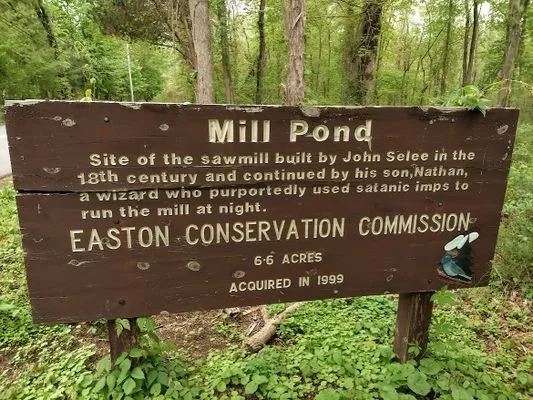
Photo from: AtlasObscura.com
For close to 30 years, a large, brown, wooden sign marked the land where a saw mill once stood, in the heart of Easton, Massachusetts. The land that became Easton once belonged to the Wampanaoag people who lived there for hundreds and hundreds of years. The first English settlers came to this area in 1694, and by 1675, the Wampanaoag were being slaughtered, enslaved, or pushed out of the area during King Philip’s War.
Post-war, the land was sparsely inhabited by settlers, eventually becoming the town of Easton. The growth began to pick up steam, and by the spring of 1755, townsperson John Selee decided to take advantage of the boom in his area, and he bought land on the Poquanticut Brook where he built a water-powered sawmill.
Selee’s business took off, cutting lumber for construction in the area. He intended for the family business to continue to grow thanks to his son, Nathan. Nathan, however, had other ideas. He was a little bit what we’d call “emo”, and wasn’t really into the whole “running a business” thing. Supposedly, he was hoping to live off of his father’s wealth instead of continuing the business for his own.
Eventually, Nathan gave in and began to run the mill.
Late one summer night, a local man named Tam O’Shanter (skeptical eyebrow raise here) was walking down Mill Street towards the mill, and he heard a startling sound - the sawmill was running! As a reminder for anyone else who is bad at history and timelines, this would have been incredibly frightning at the time. Running a sawmill during the day is already a dangerous endeavor, but the concept of it running at night… bone chilling. Don’t forget- electricity wasn’t used in businesses and homes until the late 1800s - this was in 1755.
Naturally, Tam sprinted out of there, and that’s when the whispers began.
Rumors began swirling about why the mill was so successful, and why locals would sometimes hear the mill running at night. Nathan’s strange personality didn’t help. Before long, it became local lore that Nathan Selee was a wizard, and that he’d sold his soul to the devil in exchange for imps to run his mill, so that he could kick his feet up and live a life of sweet 1700s nepo baby luxury.
The mill continued running and so did the rumors, up until the time that the mill closed in 1792, and it began to fall into a state of decay.
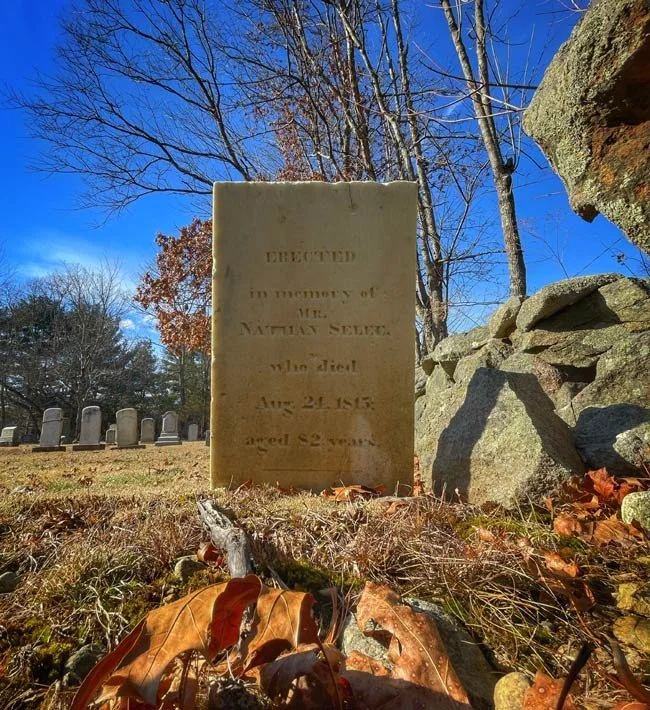
Photo from: OurNewEnglandLegends.com
Nathan Selee continued living in Easton until he died in 1815 at the age of 82, where he was - possibly - buried in the John Selee Cemetery. There’s a marker there memorializing his life, but depending on who you ask, Nathan may not actually be buried there. You see, a cemetery is considered consecrated ground, and if the townfolk truly thought he was in cahoots with Satan himself, they’d never have allowed him to be buried there. So some believe the marker is truly just there as a memorial, and some believe that the lore around Selee came about after his death, which would explain why he was allowed to be buried there. This is a real possibility, as the first mention of these rumors didn’t appear in writing until the book History of the Town of Easton, Massachusetts which was published in 1886.
In 1999, the Easton Conservation Commission bought the land, now long devoid of the mill itself, and erected a sign acknowledging the town legend. The sign read: “Site of the sawmill built by John Selee in the 18th century and continued by his son, Nathan, a wizard who purportedly used satanic imps to run the mill at night.” It became a popular roadside attraction for urban explorers and fans of the paranormal or dark history.
The sign was replaced recently in January 2026 with a more sustainable sign, though it no longer contains any reference to the Selee Mill- only the words “Mill Pond”.
Before I leave you to decide for yourself if the Selee Mill was truly run by imps or demons, whether our guy Nathan is actually buried in the cemetery or not, or if the town is clearly engaging in some serious cover-up by changing out the signs, I’d like to share with you one more interesting piece of the puzzle.
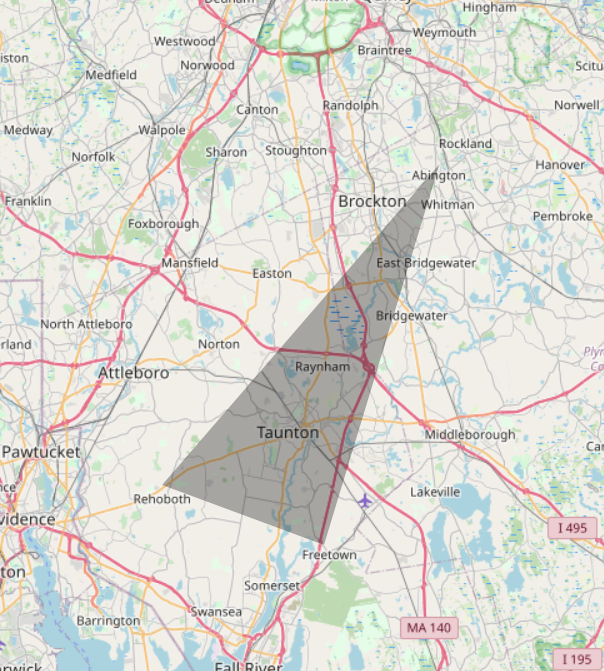
Photo from: Wikipedia
Easton, Massachusetts is adjacent to the infamous Bridgewater Triangle. Many of you are already familiar with the concept, but for those of you who aren’t, the name comes from the idea of the mysterious Bermuda Triangle, and the term was coined in the 1970s by a cryptozoologist named Loren Coleman. The Bridgewater Triangle is a (you guessed it) triangle shaped area in southeastern Massachusetts where strange things happen - ghost stories, cryptid sightings, and UFO encounters, among other weirdness. If the area is already home to cults, curses, and creatures… why couldn’t it also be the home of a sawmill run by lil’ demons?
Tell us in the comments - what do you think the truth is? And if you’ve been by the sign, tag us in the pics. We’d love to see them!
Written by: Melanie Moses
—————
SOURCES
Jeff Belanger’s “New England Legends” Podcast, Episode 335 - https://www.youtube.com/watch?v=IQrhBcinRS0
Atlas Obscura - https://www.atlasobscura.com/places/selee-satanic-mill-marker
1420 WBSM - https://wbsm.com/easton-mill-pond-wizard-sign-removed/
Wikipedia - Bridgewater Triangle https://en.wikipedia.org/wiki/Bridgewater_Triangle#